


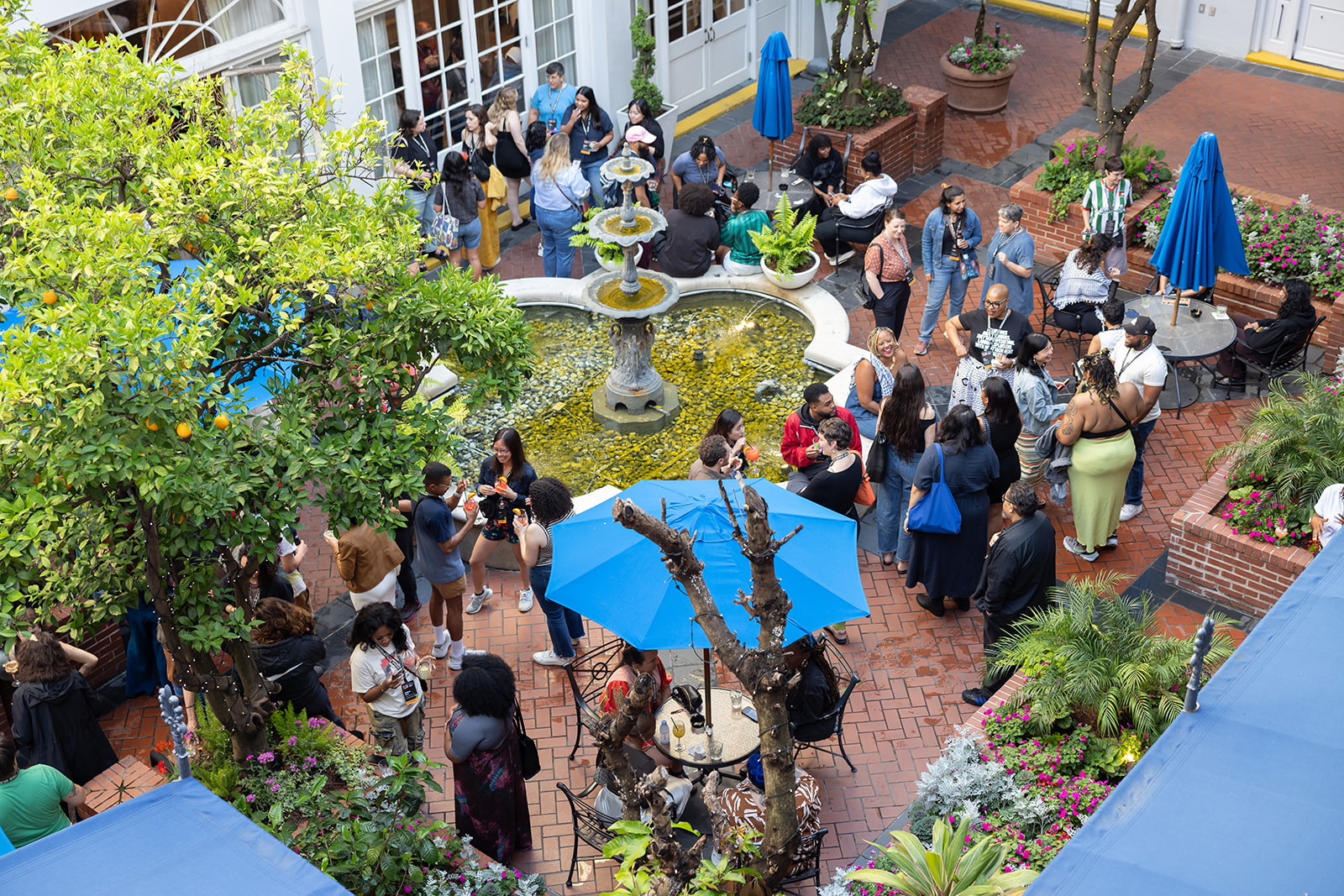
What 2025 asked of us—and what a decade of narrative power building is teaching us about the road ahead.
Read More


At ReFrame, drawing from our experiences inside of other crisis moments, two of the tools we’ve been using to coordinate our team in the time of COVID-19 is individual and organizational threat modeling & SWOT planning.
At ReFrame, drawing from our experiences inside of other crisis moments, two of the tools we’ve been using to coordinate our team in the time of COVID-19 is individual and organizational threat modeling & SWOT planning.
Threat Modeling
Threat modeling is a practice to prepare individuals and organizations in the event of threat – like the COVID-19 pandemic – and identifying ways to mitigate or lessen the impact of the threat, or eliminate the impact all together.
We use a five-step exercise to build our threat model.
1. Identify the Threat
This is the crucial first step. A threat is something that has happened, is happening or you can with some level of certainty assume will happen. If we don’t know what we’re up against, we can’t plan to lessen or eliminate the impact of it. For multiple threats, create multiple threat models.
2. Name the Impact Areas
Impact areas are a thing, a person or persons, or an activity that will be negatively affected by the threat. If we can assess where the threat will have a negative impact, then we have a better sense of where to focus our efforts.
3. Think through the Potential Outcomes
Potential Outcomes are what you think will happen to the impact areas if the threat succeeds. This can address both the direct and indirect results from the threat’s success. If we can think through possible outcomes, we can think of possible actions to either lessen the effect of the threat or eliminate the effect of the threat all together.
4. Action Planning: Mitigation
These are the actions you can take to lessen the effect of the threat on the impact area. This does not mean that you have mitigated the threat in and of itself, but rather the impact on a particular person, place, thing or action/activity. There are different actions for different risk levels as individuals and collectives, and it’s good to map those out if you can.
5. Action Planning: Elimination
These are the actions you can take to eliminate the threat. This does not imply that the threat is eliminated, but rather it means that the impact of the threat is eliminated.
We have a Google Slide template for threat modeling, a linear approach through the five steps.
Another idea is to create a flowchart like this.
Last, but not least, inside of crisis moments things are always changing. One design process we like to help us adapt our threat models to shifting conditions is called PAI: Postulate, Assess, Iterate. It means that as we do our threat model, we ask questions and brainstorm. After completing it, we assess it with ourselves and those we work with and care about. After we assess it, we then iterate or develop it further to respond to the assessment.
Identifying Strengths, Weaknesses, Opportunities, and Threats (SWOT)
Another tool we used as an organization is called SWOT, a tool that helps us identify our strengths, weaknesses, opportunities, and threats. To further develop your strategic action plan use the SWOT template we’ve developed to help you answer strategic questions that will assess the strengths, tools, and resources at hand.
In addition to looking at the organizational level, we added an extra layer on it to look at the movement ecosystem your organization is a part of as well.

We are here with you. Our hearts and thoughts are with everyone who is struggling right now.
We are here with you. Our hearts and thoughts are with everyone who is struggling right now.
Like many people across the country, at ReFrame, we are sorting through the many layers of worry and stress to prepare. We are shoring up our staff and networks to survive this crisis, and to lean into the opportunity COVID-19 is presenting. (We took our team through threat modeling as a part of our organization practice and supported them to use the tool for personal planning. And leaned into some good old SWOT planning).
Many of us are worried about the worst: what if my family gets sick? What if my partner loses their job? How will my parents have income? Will my friend have somewhere to live? These worries extend beyond our homes to our neighbors, to our communities, to our states, and to our country.
These worries feel heavier, because we all understand that as a society, as governments, and industries respond to the pandemic – these responses will shape norms and rules in society for the foreseeable future.
Common sense in society is up for grabs, and what is true about society can significantly shift.
The question is: How will we move in this moment to shape the post-pandemic world in ways that were unimaginable two months ago?
We can already see that this crisis has created a challenge for opponents of justice and democracy. We can see this most embodied by Trump and his MAGA movement when they faltered in their opportunity to reify Trump as the prophet of American protectionism. This crisis is also creating cracks in what seems like a powerful relationship between electeds and media.
These cracks in the opposition and the impacts of the crisis stretch across geography, race, gender, class, generation and political affiliation, we have a responsibility to move differently.
We have also seen the emergence of distributed mutual aid networks that are utilizing new technologies, existing strong networks (parents, faith, community, identity, etc) to take care of each other, driven by solidarity and not the market.
The fumbling of our opposition and the spontaneous rise in solidarity are heartening, and we are just in the beginning.
As in any crisis, that window of what is possible, of what people understand to be true could shift towards national protectionism and authoritarianism. But it doesn’t have to.
We believe we can shift it towards a common sense where the government becomes a vehicle for mutual aid, a different economy where the market doesn’t dictate social goods like healthcare, a society built on trust and solidarity (the narratives that undergird so many existing campaigns).
While we wrestle with the heaviness of this moment, the uncertainty, the fear, we have an opportunity to collectively write the story of what our world will become in the days, months, and years after the coronavirus pandemic. This will require us to move beyond the practical challenges we all face in our existing work.
This moment requires us to move differently and shift what we have been doing, not to match the challenge of today, but to build tomorrow.
We are talking with our partners, listening to our networks, and making plans for what this moment calls for and what we think is possible. We will be leveraging our relationships and lessons from some experiments in narrative to find the right next step. Over the next couple of days we will keep you in the loop of what we are seeing and what we are doing, and how we can work together in these times.
In solidarity,
#TeamReFrame

The political landscape is shifting by the week. What we need to stay above the current is what will allow us to build narrative power for the long-haul.
ReFrame’s piece on Narrative Power, is now up now on Medium.
It argues, among other things, that developing new leaders that reflect our changing democracy, and equipping these leaders with relevant infrastructure and relationships is a cornerstone in the ecosystem of narrative power.
Because contrary to popular belief, narratives don’t trickle down, they grow up.
The political landscape is shifting by the week. What we need to stay above the current is what will allow us to build narrative power for the long-haul. This includes:
Please share this piece in your networks!

The fifth class of the ReFrame Mentorship kicked off in May with a spectacular Opening Convening in Denver and Breckenridge, Colo.
We are so excited!
The fifth class of the ReFrame Mentorship kicked off in May with a spectacular Opening Convening in Denver and Breckenridge, Colo. Check out the photos, share and tag them here.
ReFrame has seen a lot of growth – from a single program to an organization with multiple strategies. Whether we are working with power building partners in states like Florida and Virginia, or tracking and analyzing national narratives, we continue to grow the strategic leadership of people and support the relationships that allow movements to shape meaning and bend common sense towards justice and liberation.
The flagship ReFrame Mentorship is at the heart of our vision and strategy.
The awe-inspiring beauty of the Rockies was a perfect backdrop for the opening of the program, which brought together the powerful 2019 mentee cohort with some of the country’s smartest strategic communicators. This week-long convening set up the next six-months of deep strategic leadership development on narrative and communications strategy with case studies, trainings, relationship building, and a sprinkling of Spring snow.
Check out the photos from the convening. We had snow, mountains, sun! Please tag and share!
Best,
Joseph Phelan
ReFrame Director
P.S. – We will be sharing more about the changes and shifts at ReFrame in the coming months. As always we love hearing from you, please let us know your thoughts, feedback, and questions.
P.P.S. – ICYMI – Jung Hee Choi, ReFrame Senior Advisor and the Associate Director for Communications and Policy Strategies for Power California, on what we need to win.

Jung Hee Choi is a Senior Advisor and mentor for ReFrame and the Associate Director for Communications and Policy Strategies for Power California.
Jung Hee Choi is a Senior Advisor and mentor for ReFrame and the Associate Director for Communications and Policy Strategies for Power California.

What are the exciting narrative interventions you see happening?
Some of the most exciting narrative interventions I see happening right now are about the rising power and leadership of women of color and young people, particularly young people of color. In this last election, it was amazing to see women of color and young people really own their political power and what happens when they do. This is the most diverse, youngest and most female Congress we have ever had. And their elections were fueled by women and young voters, particularly voters of color, turning out in record numbers. The leadership of new younger women of color like AOC (Alexandria Ocasio-Cortez), Ilhan Omar and or Ayanna Pressley is urgent, unapologetic, bold and exciting to watch. But it’s not just about them. Their elections and leadership represent a larger political and narrative shift that is happening and being pushed by young people on the ground who are leading a mix of social movements. The politics and leadership of AOC, Ilhan and Ayanna don’t exist without the leadership of the young people in the Black Lives Matter movement, Dreamers and anti-deportation organizers fighting for immigrant rights and the young activists demanding urgent action on climate change and gun violence.
Power California did a poll of over 2,000 young people of color last year, and it showed that young people valued voting as the most important way they can make change while at the same time reporting high rates of participation in protests/marches, boycotting and other forms of action. In essence, organizing in the streets and organizing at the polls are being seen less and less as an either/or. Instead, young people are understanding them as part of the same spectrum of strategies to build power for our communities.
What should people in the movement be thinking about or doing right now?
We should continue to think of how we offer a different vision of the world and leadership our country needs, and what power we need to make our vision a reality. It’s never been more important for us go beyond resistance but to offer a vision of a safe and just world where we all have safe harbor from violence, where we all thrive along with our planet, and where we all take care of one another. At every level, we need to think about how we make our vision a reality – from the policies and systemic change we fight for, to the people we elect, all the way to the stories we tell to win hearts and minds.
What do organizers need to know about communications in this moment?
I would say that there is more focus on communications and narrative strategies in the movement than ever before. More and more organizations are investing in it. There are more communications strategists and positions in organizations. Funders are now all about it. While that it is exciting and needed, fighting to shift narrative – in essence to shape how people think about the world – is nothing new. Current and past generations of organizers have been fighting for narrative power – whether we called it that or not. What also hasn’t changed is that the people directly impacted by the systems we seek to change and the people on the front lines fighting for the world we seek, should still lead our movement and the narrative strategies that tell the world what we are fighting for.
What organization is doing really inspiring work?
On the national level, I love what National Domestic Workers Alliance (NDWA) and the new [women’s organizing group] Supermajority are doing. Building an intersectional, feminist movement led by women of color is amazing. I love the mixing of traditional organizing, narrative change and culture strategies to build power and visibility. On a regional level, I love what’s happening in my home state of California. The past two decades of organizing have led to the transformation of California. Less than three decades ago, our state was the leader of racist, anti-Black and brown, and anti-youth policies. While California is far from perfect, it is no longer a source of hateful, harmful policies or political leaders who crafted laws like Proposition 187, 227 or Prop 21. Instead, it’s leading in immigrant integration, criminal and juvenile justice reform, among other things. And now we are taking on corporate power. Because of Million Voters Project and other community and labor groups, California voters have a chance to end a corporate property tax loophole that has stolen billions from our schools and communities. Creating and getting the Schools and Communities First initiative on the 2020 ballot was led and advanced by on-the-ground racial and social justice organizations. If passed, it will signal a check on corporate power and the rise of community power. The deep hard organizing work that has led to transformation of California gives me a tremendous amount of hope.

At ReFrame, we envision national and international movements buoyed by hundreds of thousands of strategists who are collaborating to develop and advance deep narratives that bend the long arc of history toward justice.
At ReFrame, we envision national and international movements buoyed by hundreds of thousands of strategists who are collaborating to develop and advance deep narratives that bend the long arc of history toward justice.
We know that the work of shifting the big stories that shape not only what actions society takes, but what is even deemed possible, happens in fits and starts, and is more often than not, a generational project.
While the world around us seems to be burning with crisis after crisis, we are staying the course and developing the strategists and leaders we need.
Please join us in welcoming the fifth class of the ReFrame Mentorship. They come from amazing organizations from across the country who are advancing a vision of the world that we all want.
Laura Li
18 Million Rising
Laura Li is a Community Organizer and the Campaigner at 18MillionRising.org, a digital first Asian American advocacy organization, where she develops and executes its issue campaigns grounded in local organizing and stories from the margins. Learn more about Laura and the rest of the 2019 cohort here.
Micky Jordan
Southerners on New Ground (SONG)
Micky Jordan is a Black queer and genderqueer activist born in Florida, but has called Richmond, VA, home for over 20 years. Micky joined SONG as a member leader in 2014 and in 2016 became the Richmond Organizing Fellow leading campaign work around police accountability and continuing to build SONG’s base, and in 2018 he became a full time Communications Assocate. Learn more about Micky and the rest of the 2019 cohort here.
Maria Reza
Grassroots Leadership
Maria Reza is proud to come from a family of teachers and powerful women that taught her to never be afraid of her voice. As the Digital Organizer at Grassroots Leadership (a Texas based organization), she uplifts narratives created by directly impacted communities in order to achieve meaningful and restorative change. Learn more about Maria and the rest of the 2019 cohort here.
Victor Suarez
California Calls
Victor Suarez is the Strategic Communications Coordinator with California Calls, a statewide alliance of 31 grassroots community based organizations working to transform the California electorate through year round voter engagement. His work is centered at the intersection of voter engagement, narrative development and digital strategy. Learn more about Victor and the rest of the 2019 cohort here.
If you are as excited as we are, please share the excitement and congratulations of this exciting cohort on Facebook, Twitter, and Instagram.
While the mentorship program continues to be our flagship program, we are developing new programs that build the movement narrative infrastructure we need to win. We are ramping up our collaborations to advance narratives that create space for victories and actions that expand justice, freedom, and safety for all people right now.
LEARN MORE ABOUT ALL THE ORGANIZATIONS
18 Million Rising
Alabama Coalition for Immigrant Justice
California Calls
Central American Resource Center (CARECEN)
Coalition to Stop Violence Against Native Women
Florida Immigrant Coalition
Grassroots Leadership
Ignite NC
Mano Amiga
National Black Worker Center Project
New Florida Majority
Ohio Student Association
Organize Florida
Power California
Southerners on New Ground

