


In 2025, many of us returned to a familiar but urgent question:
How do we stay grounded when the ground itself keeps shifting?
For Team ReFrame, it was not just a question of speed or scale, but of posture. What shape did we need to be in to meet this moment—not only to respond, but to remain accountable to the long arc of narrative power-building we commit ourselves to every day?
The year unfolded under conditions that demanded steadiness, discipline, and care. Across movements and organizations, we navigated heightened repression, political volatility, and real threats to the people doing this work. These conditions were not abstract. They shaped how campaigns operated, how leaders communicated, and how communities experienced risk. Rather than chase every turn, we focused on building—deliberately and in relationship—the infrastructure, practices, and partnerships that help movements anticipate attacks, shift narratives, and hold ground over time.
2025 also marked an important milestone for ReFrame: our first full year operating independently after spinning out from fiscal sponsorship. This shift sharpened our responsibility—not only to deliver strong work, but to steward it with clarity, sustainability, and accountability to the field we serve.
Throughout the year, we held a real tension. On one hand, the moment required responsiveness. We supported partners navigating narrative flashpoints, moments of crisis, and urgent shifts in the political landscape—providing narrative strategy, advising, and rapid-response support across campaigns, coalitions, and state-based networks in multiple regions. This work mattered. It helped organizations respond with intention rather than panic and supported leaders and communities operating under pressure.
At the same time, the pace of an “everything, everywhere, all at once” era of crises made something else clear: we could not—and should not—be everywhere at once. Chasing every moment of rapid response risks reinforcing the very dynamics that keep movements reactive and mirrors the very conditions our opposition seeks to exploit. The deeper question became:
What shape do we need to be in to support hundreds of leaders and organizations, and the thousands of people coming into movement spaces, to sharpen and deepen their impact with narrative strategies both in the moment and over time?
Holding this contradiction shaped our choices throughout 2025—and will continue to shape choices over the coming years. We met immediate needs while staying oriented toward building capacity that could outlast any single moment. In practice, this meant deepening our commitment to narrative infrastructure.
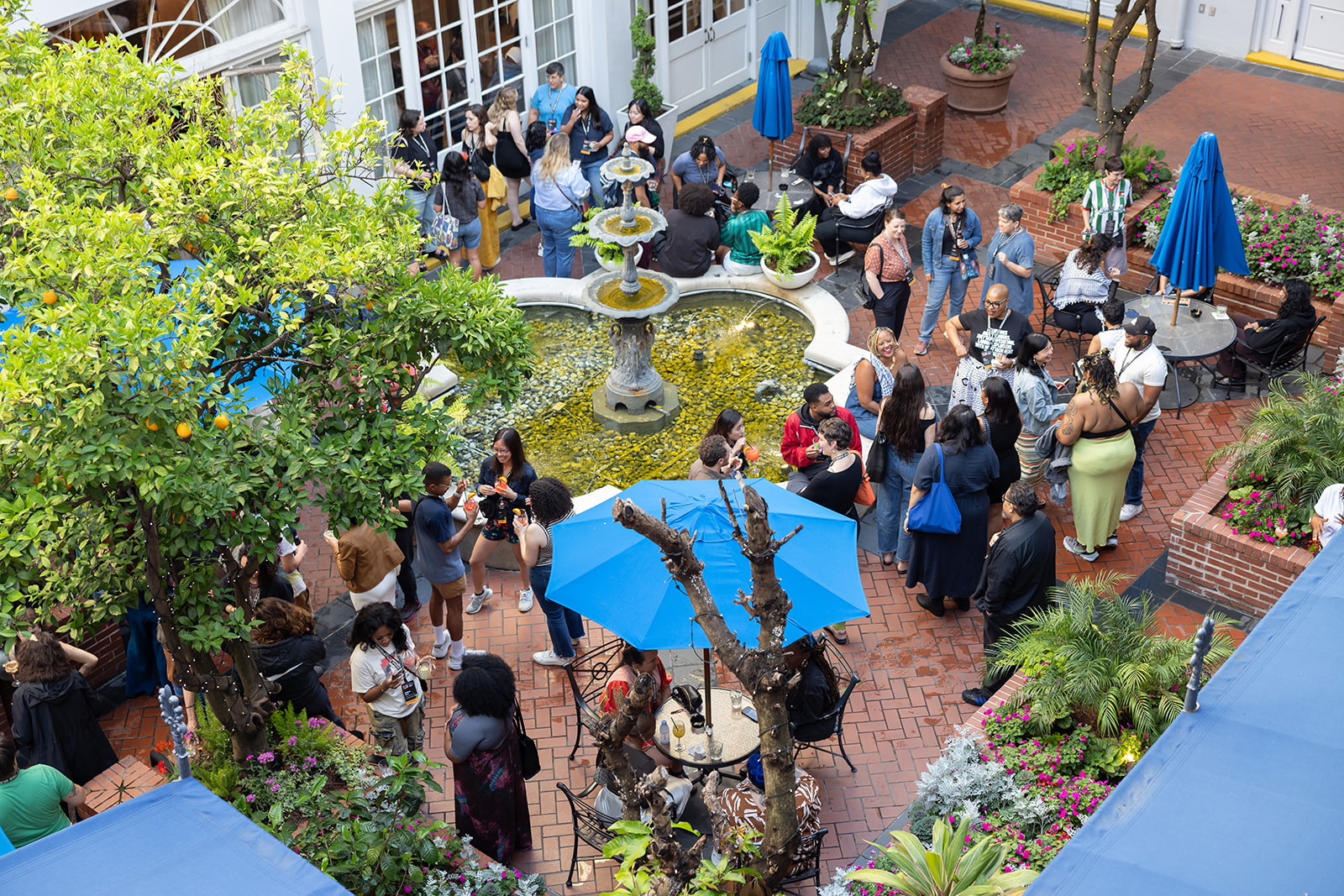
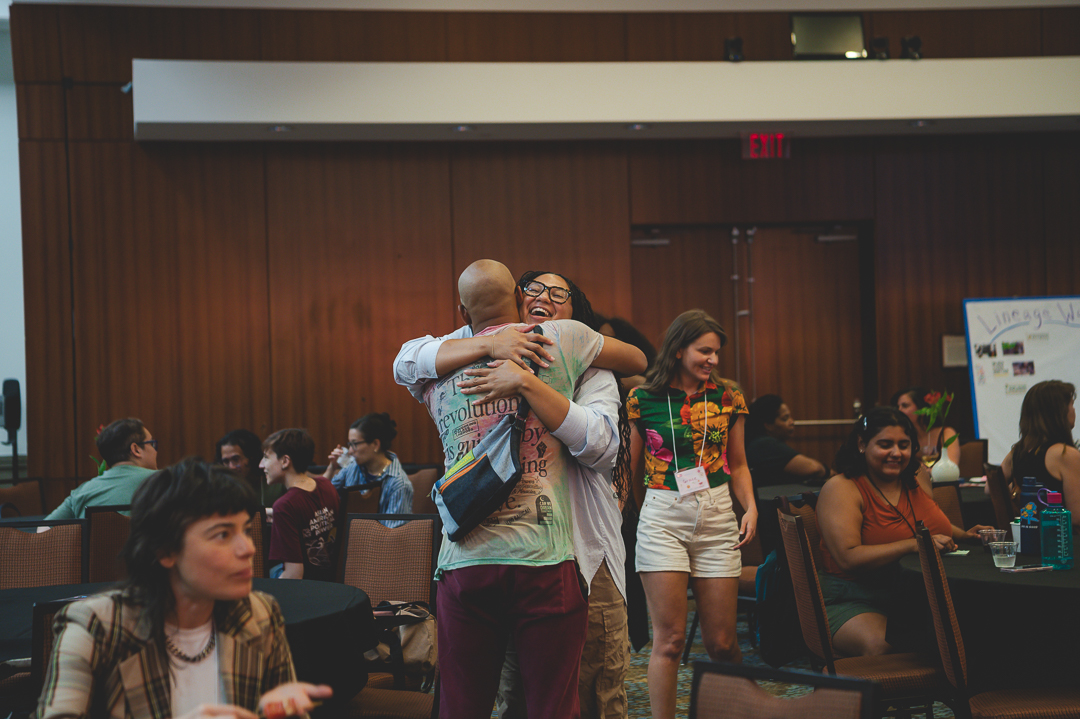
In the spring, we convened—alongside the Radical Communicators Network—more than 700 strategists, communicators, artists and culture workers, and organizers at the Narrative Power Summit, creating space to step back from crisis and sharpen collective strategy.
We also launched our first Narrative Campaign Design Pilot with more than 30 power-building organizations from across the country, testing what it looks like to design narrative campaigns with rigor, shared frameworks, and intentional resourcing.
Together, this work informed the conceptual foundation for the Narrative Nerve Center, alongside a field-wide call to raise $100 million for narrative power-building infrastructure.
And over the past few weeks, we worked with The Opportunity Agenda—an organization that has helped shape the field for more than two decades through values-based messaging, rigorous research, and capacity building for social justice leaders, communicators, artists, and culture workers—to ensure that, as the organization closes, its narrative and training work carries forward. Beginning in 2026, this work will live within ReFrame—not as a departure, but as an extension of a shared lineage and a deepened investment in the field’s long-term narrative capacity.
Much of this work did not announce itself loudly. It took place inside active campaigns and state-based networks, through advising, design sprints, and ongoing accompaniment at the local, state, and national levels. It was the work of helping organizations clarify audiences, test frames, and align narrative strategy with real-world conditions. It was also the work of learning—often in real time—what holds, what breaks, and what evolves under pressure.
Holding this work also required care for the people doing it—making space for reflection, recalibration, and mutual support as part of sustaining the long haul. This care extended beyond our team to the leaders, organizers, communicators, artists and culture workers we support, recognizing that narrative power is built by people navigating real risk, grief, and responsibility.
.jpg)
Along the way, we continued to sharpen the methodologies that underpin narrative power-building: how audiences and personas are developed, how narratives are distributed across platforms and messengers, and how narrative change and narrative power are assessed over time. Leadership development and capacity building remained central to this work—for individuals and for the organizations, networks, coalitions, and alliances carrying this work forward—particularly as new organizers and communicators came online seeking shared language, strategy, and grounding. At the same time, more senior leaders needed increased support to execute the promise of their strategies.
Our learning was not confined to the U.S. context. In 2025, members of Team ReFrame participated in the Global Artivism Conference, deepening our engagement with global artivists and movement practitioners working under sustained repression.
.jpg)
Alongside lessons drawn from movements across the Global South and from communities organizing within right-wing strongholds in the United States, these exchanges reinforced a shared truth: narrative power is built through culture, creativity, and collective memory as much as through messaging and media strategy—and it is sustained over time through long-haul investment, discipline, rigor and care.
This understanding resonated across the field. We were honored to see this moment reflected in the recent Narrative Power issue of The Forge, including the piece “Invitation to 21st-century Orators, Griots, Futurists"”, alongside contributions from many of our collaborators and peers.
These conversations echoed themes lifted during the Narrative Power Summit, including our opening remarks.
As we continue to mark ReFrame’s tenth year, the question is not whether we have “arrived,” but what we are becoming. The decade behind us holds experimentation, risk, adaptation, and growth. Our past affirms a steady notion we have long known:
Narrative power-building is long work, sustained by people willing to learn, iterate, and stay in relationship even when conditions are difficult.
The shape we took in 2025 was not about being everywhere, but about becoming more grounded in who we are, how we work, and what this moment truly asks of us. Our work did not resolve the conditions we’re navigating—but it clarified our posture within them. Rooted in relationship, discipline, rigor, and care, that clarity reflects our commitment to the long haul and will continue to guide us as we build, adapt, and stay in relationship in the years ahead.
As we close out the year, we do so with deep gratitude—for the partners, collaborators, and communities who make this work possible, and for the leaders and organizations advancing narrative power every day. In the year ahead, we’ll share more from our 10-Year Impact Study and take time to honor this collective leadership through the inaugural ReFramies in Spring 2026.
We also pause to honor those we lost this year—visionaries, freedom fighters, artists, organizers, and elders whose work and lives continue to shape our movements. We carry their contributions forward with care: Sam Nujoma, Paquita la del Barrio, Cecile Richards, Souleymane Cissé, Roberta Flack, Roy Ayers, Rubby Pérez, Brandi Collins-Dexter, José “Pepe” Mujica, Assata Shakur, Miss Major Griffin-Gracy, D’Angelo, and Alice Wong.We remember them not only in grief, but in commitment—carrying forward what they built, what they imagined, and what they made possible. Their lives remind us that this work is bigger than any one moment, and that the road ahead is walked in lineage, in solidarity, and together.



.jpeg)


.png)

%20(1).png)


